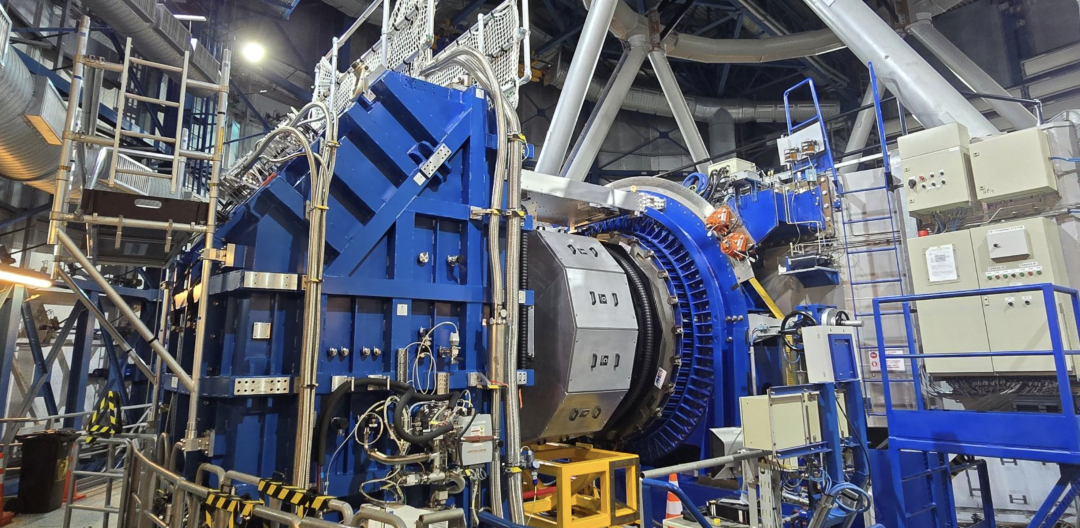


For the last decade in labs across Europe and Chile we have been building MOONS, the Multi-Object Optical and Near-infrared Spectrograph. This remarkable instrument is currently being installed and tested on ESO’s Very Large Telescope (VLT) in Chile, where it is set to give astronomers a new way to study our Universe.
Explore the pages that follow for more details about the instrument’s design and to discover the science we can do with this beast of an instrument. If you want more information you might find it amongst the publications, but if not please do get in touch.
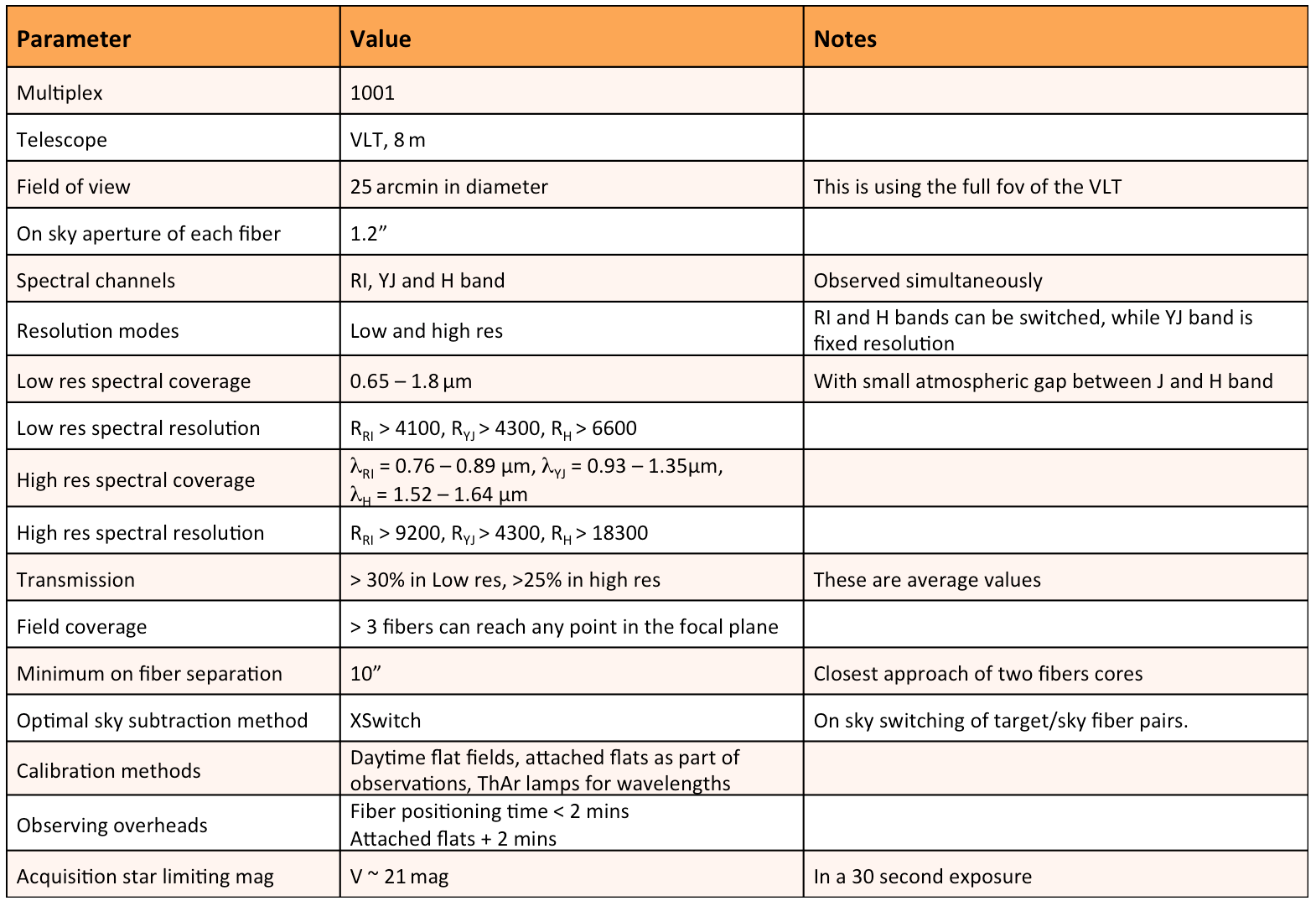
To begin proceedings, the table below gives a summary of the main instrument properties that MOONS will achieve, with simulated sensitivities listed at the bottom of the page.
Predicted sensitivities
A detailed end-to-end model of MOONS has been built that produces realistic 2D detector images and can be passed through the developing MOONS pipeline. Naturally, this is a very complex model and has therefore not been designed for sharing. However, a more publically available 1D model exists which has been tested thoroughly against the full optical model.
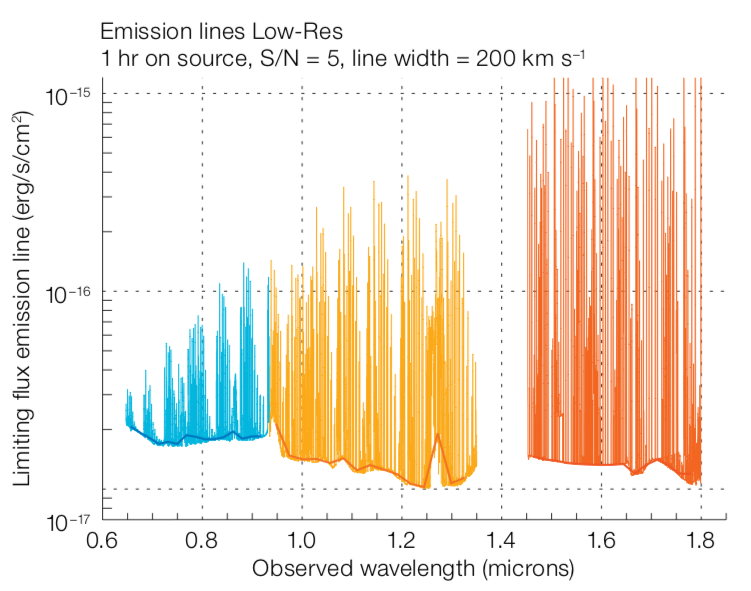
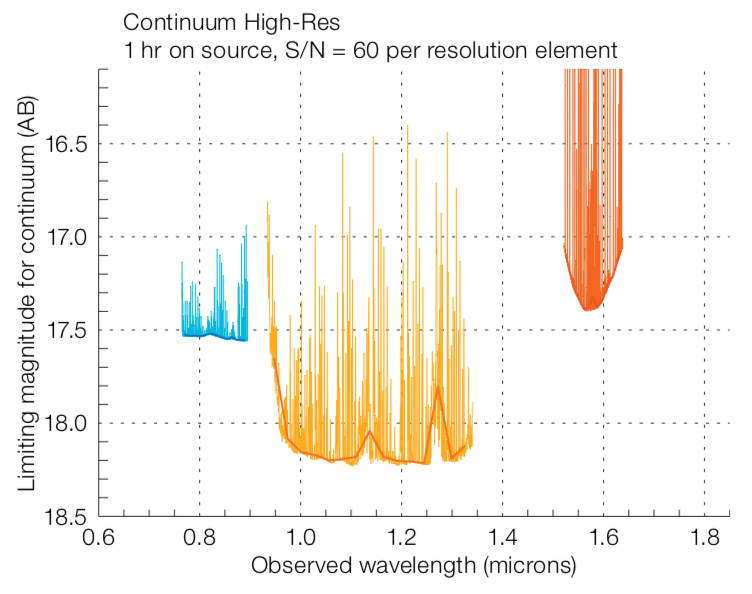
From these models, we currently predict for MOONS the following sensitivities. Note these calculations are all: per resolution element, with a 1 hour exposure and including background subtraction.
High resolution
Low resolution (dashed lines: data binned to R=1000 after masking OH sky lines)

Emission line sensitivity (Low resolution)